Multi-modal behavioral and neural recordings in freely interacting mice: 3D pose tracking + Ca²⁺ imaging
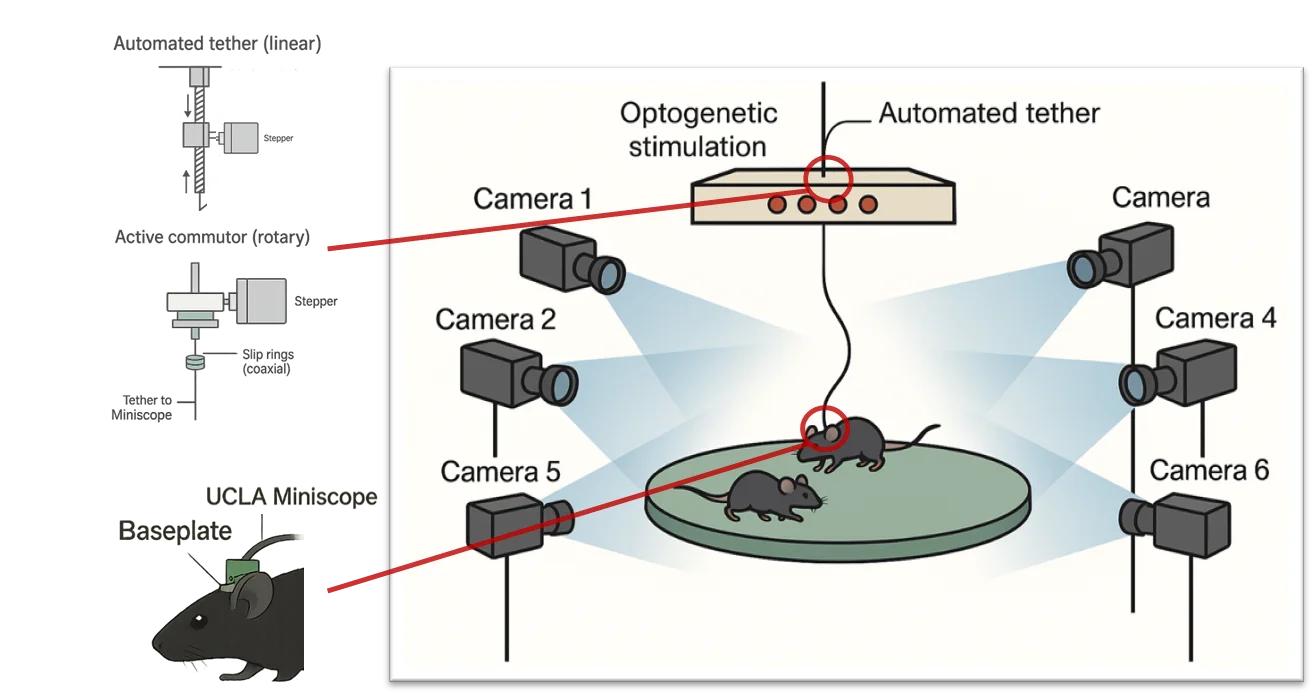
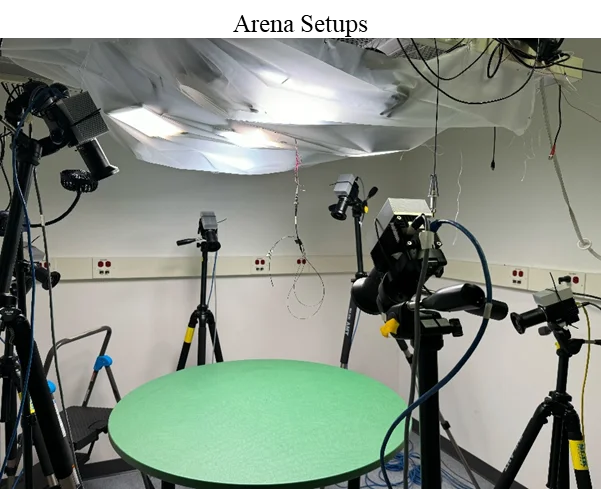
Six-camera recording arena with automated tether system and UCLA Miniscope V4...
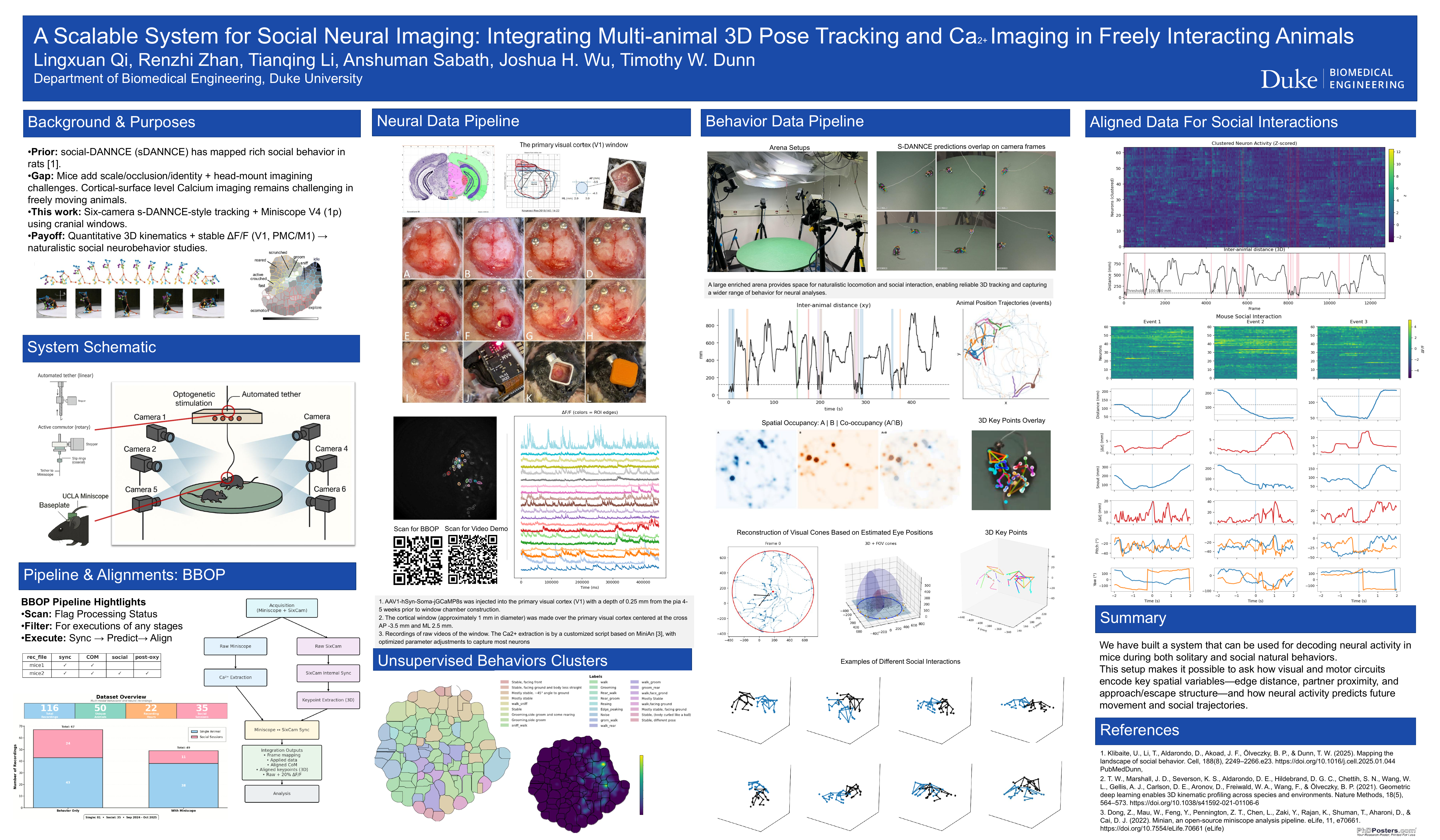
Understanding how cortical circuits encode social behavior requires simultaneous measurement of neural activity and precise 3D kinematics in freely interacting animals. While social-DANNCE has mapped rich social behavior in rats, mice present additional challenges: smaller scale, more occlusion, identity ambiguity, and the difficulty of head-mounted imaging during natural movement.
We introduce SocialCa3D, combining six-camera sDANNCE-style 3D pose tracking with UCLA Miniscope V4 calcium imaging through cranial windows. This enables quantitative 3D kinematics alongside stable ΔF/F recordings from V1 and PMC/M1, opening new possibilities for naturalistic social neurobehavior studies.
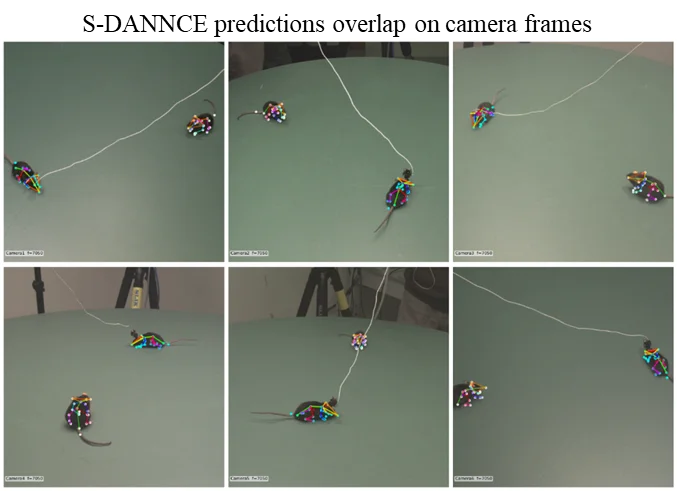
Left: Physical recording arena with six synchronized FLIR cameras. Right: S-DANNCE 3D keypoint predictions from multiple viewpoints.
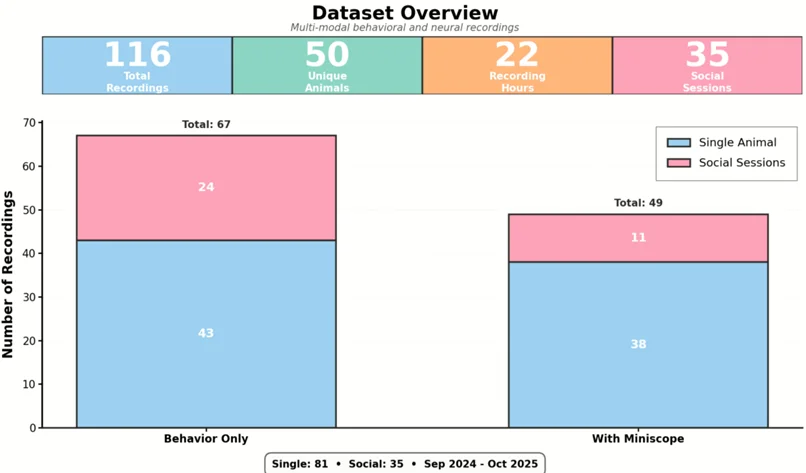
SocialCa3D spans 116 recording sessions across 50 animals, including both single-animal and social pair configurations, with and without simultaneous neural imaging. Data was collected September 2024 – October 2025.
Dataset composition: 67 behavior-only sessions and 49 sessions with simultaneous miniscope recordings.
The full dataset will be publicly available alongside our forthcoming benchmarking paper.
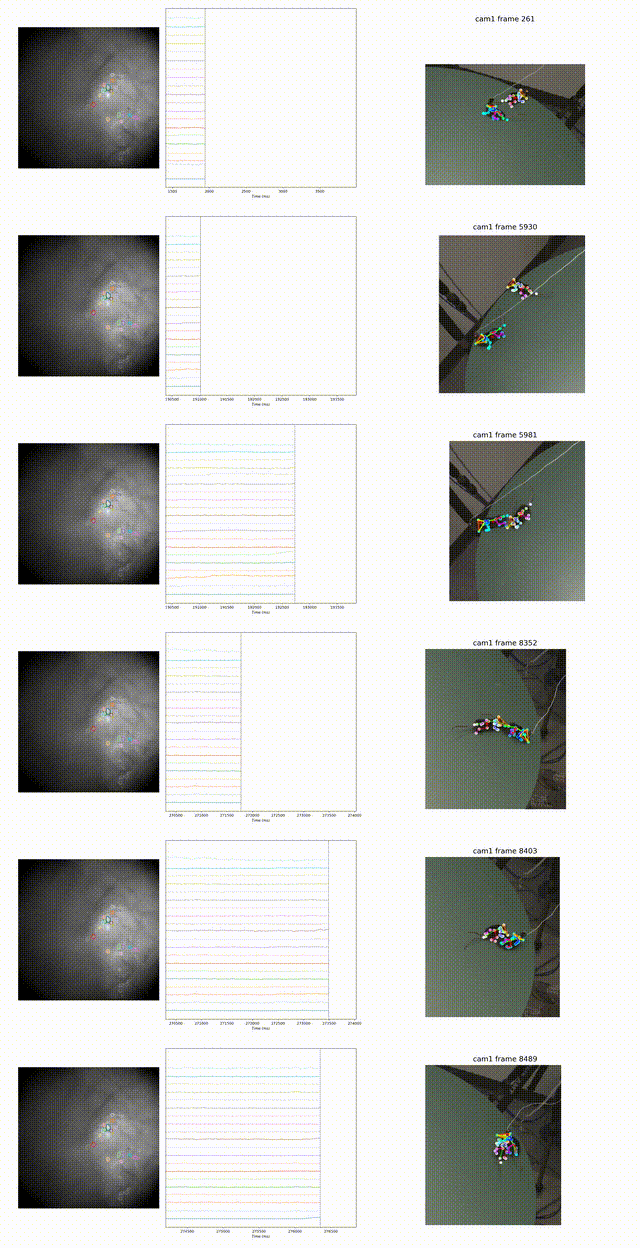
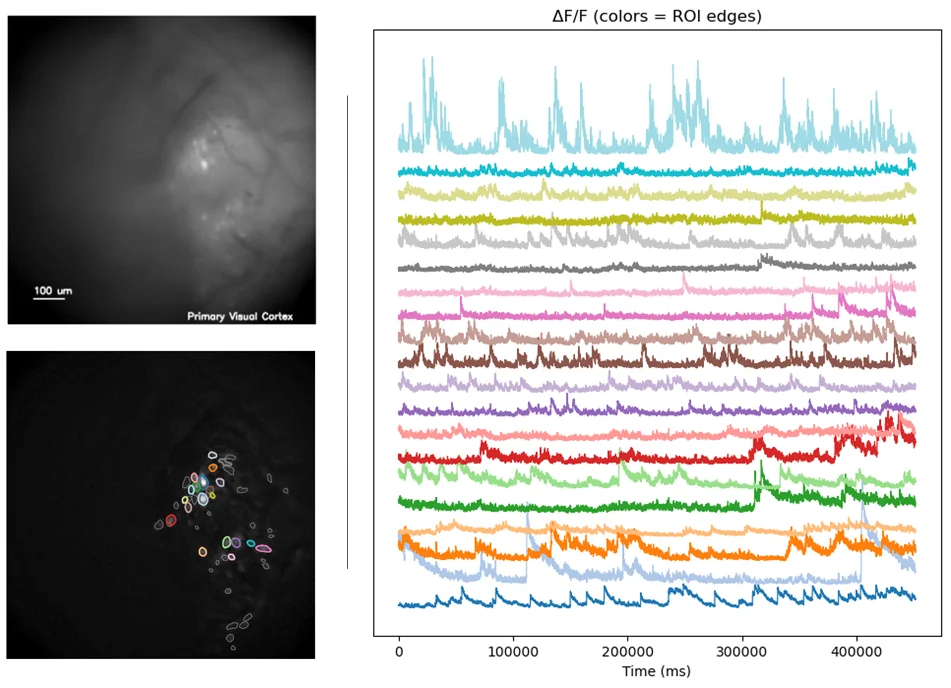
Calcium imaging from layer 2/3 of primary visual cortex (V1) using AAV1-hSyn-Soma-jGCaMP8s. ROI extraction and ΔF/F computation via a customized MiniAn-based pipeline with optimized parameters for capturing neuronal signals through cranial windows.
Left: Field of view from primary visual cortex with extracted ROIs. Right: ΔF/F traces from individual neurons across a ~7 minute recording session.
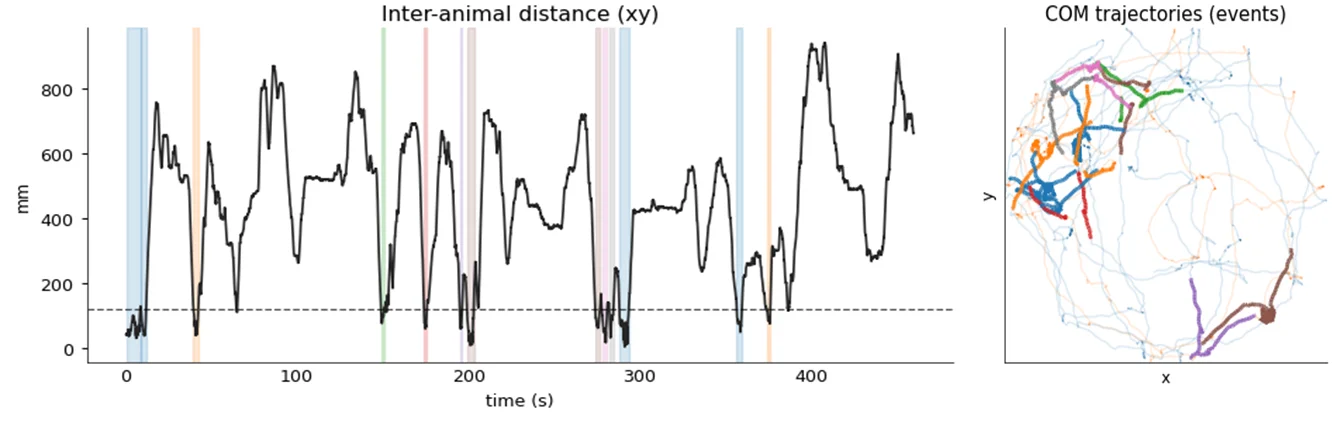
3D pose estimation via sDANNCE provides full-body keypoint tracking for both animals during social interactions. Center-of-mass trajectories and inter-animal distance metrics enable automated detection of social events.
Left: Inter-animal distance over time with detected close-proximity events highlighted. Right: Center-of-mass trajectories color-coded by event.
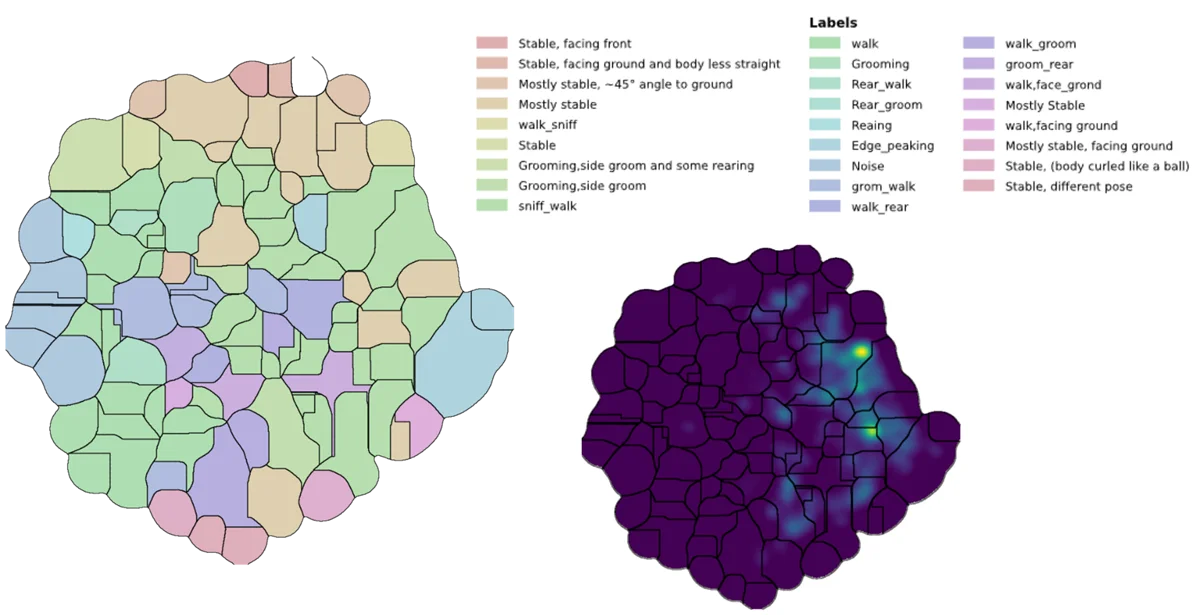
Unsupervised behavioral clustering from 3D pose embeddings reveals distinct behavioral states including locomotion, grooming, rearing, sniffing, and idle periods.
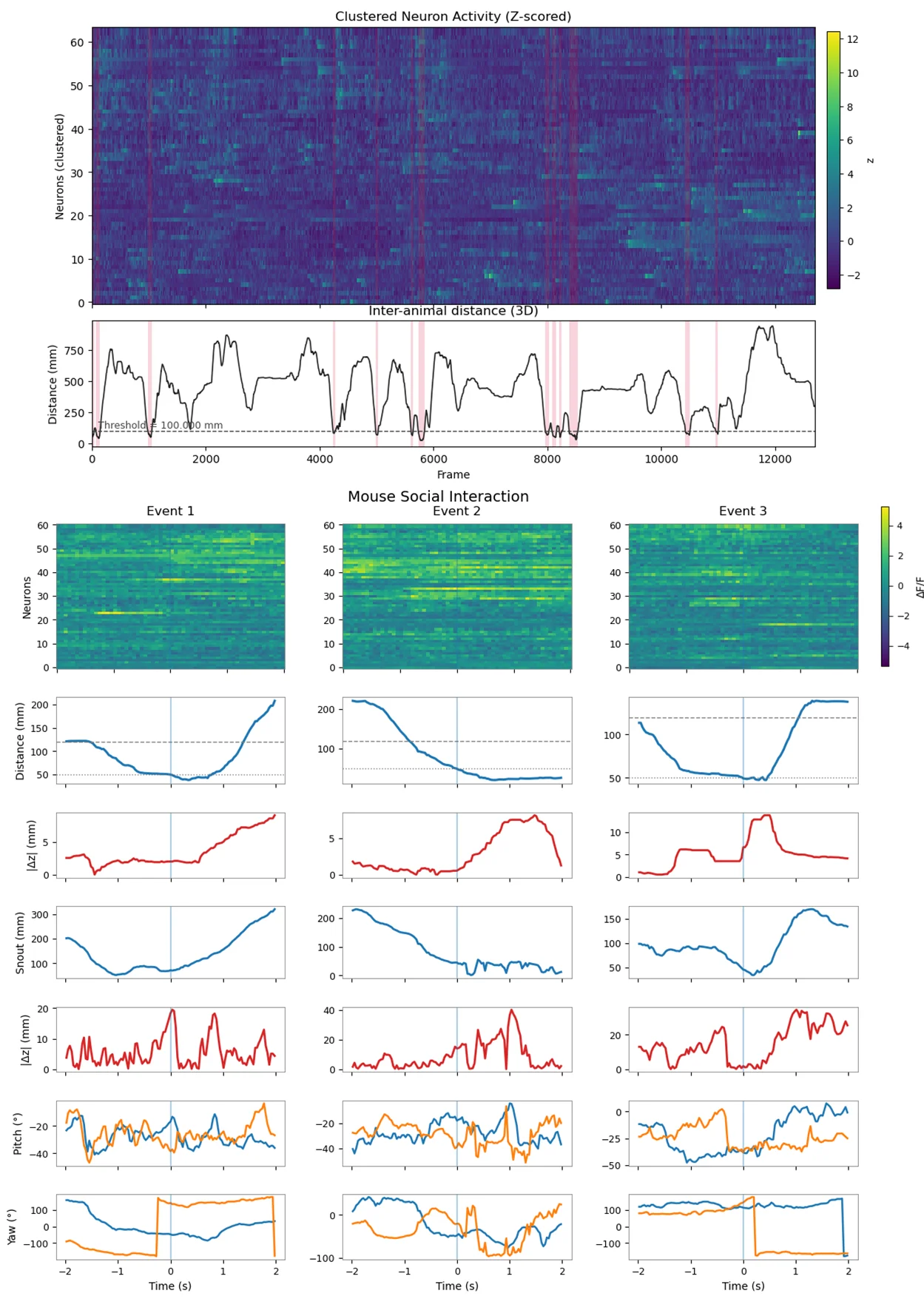
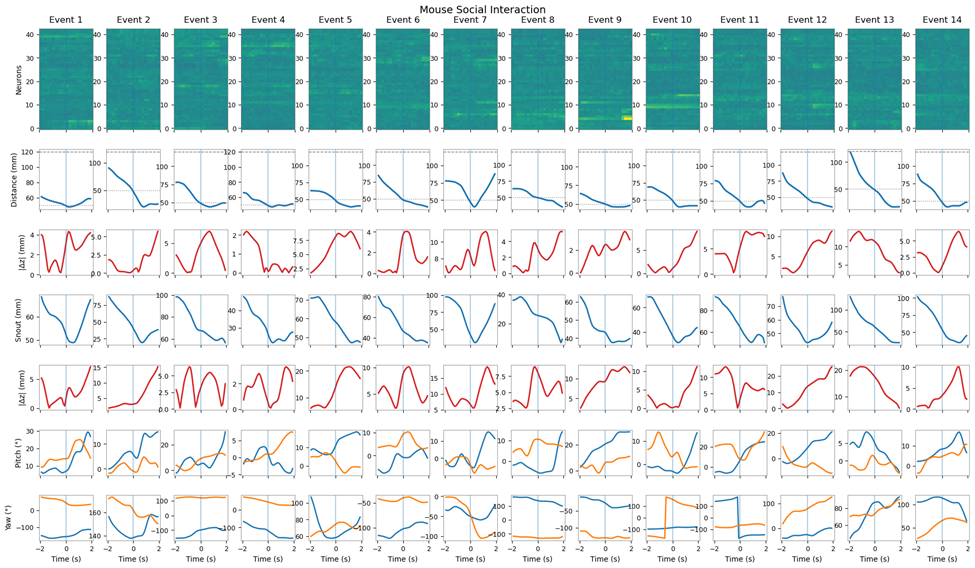
Frame-level synchronization between calcium imaging and 3D pose enables analysis of neural activity in the context of precise spatial and social variables. We can examine how V1 populations respond during specific social events defined by inter-animal distance and body pose.
Top: Clustered neural activity (z-scored) aligned with inter-animal distance. Social interaction events (pink bars) mark periods of close proximity. Bottom: Detailed view of three example social events showing neural activity alongside behavioral variables (distance, snout position, head pitch/yaw).
Neural activity and behavioral variables aligned to 14 detected social interaction events.
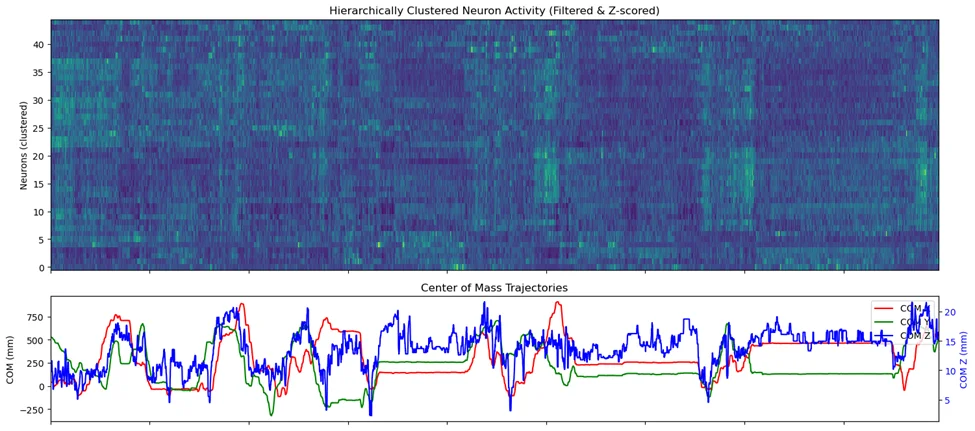
PMC single-animal recording: Hierarchically clustered neural activity aligned with center-of-mass trajectories during open-field exploration.
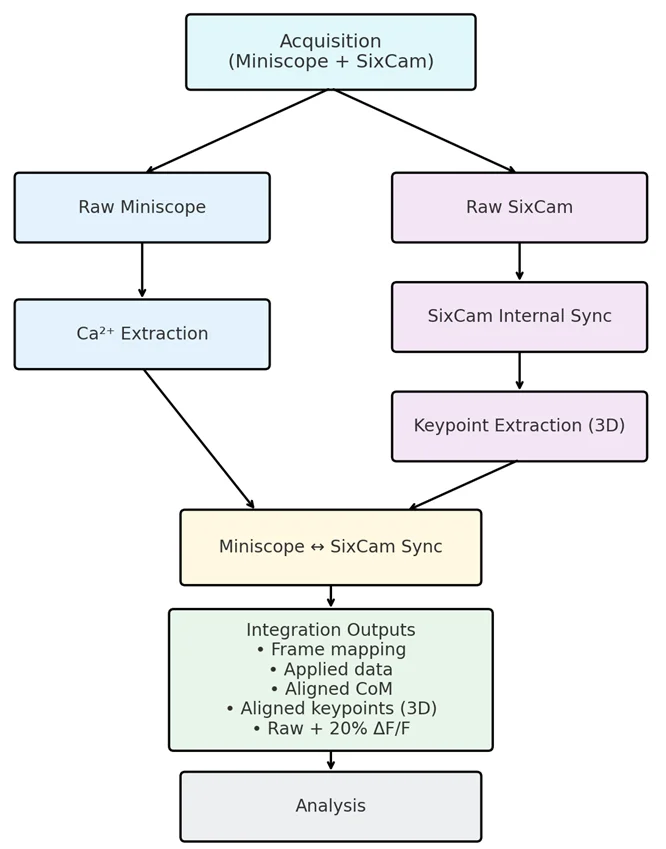
The BBOP (Bryan Building Open Field Pipeline) provides end-to-end processing from raw multi-camera video and miniscope recordings through synchronized behavioral and neural analysis.
Key features include automated camera synchronization, 3D keypoint extraction via sDANNCE, calcium trace extraction via MiniAn, and frame-level alignment between modalities.
Paper in preparation. For now, please cite our SfN 2025 poster:
@misc{qi2025socialca3d,
author = {Qi, Lingxuan and Zhan, Renzhi and Li, Tianqing and
Sabath, Anshuman and Wu, Joshua H. and Dunn, Timothy W.},
title = {A Scalable System for Social Neural Imaging: Integrating
Multi-animal 3D Pose Tracking and Ca²⁺ Imaging in
Freely Interacting Animals},
howpublished = {Poster presented at Society for Neuroscience (SfN)},
year = {2025}
}